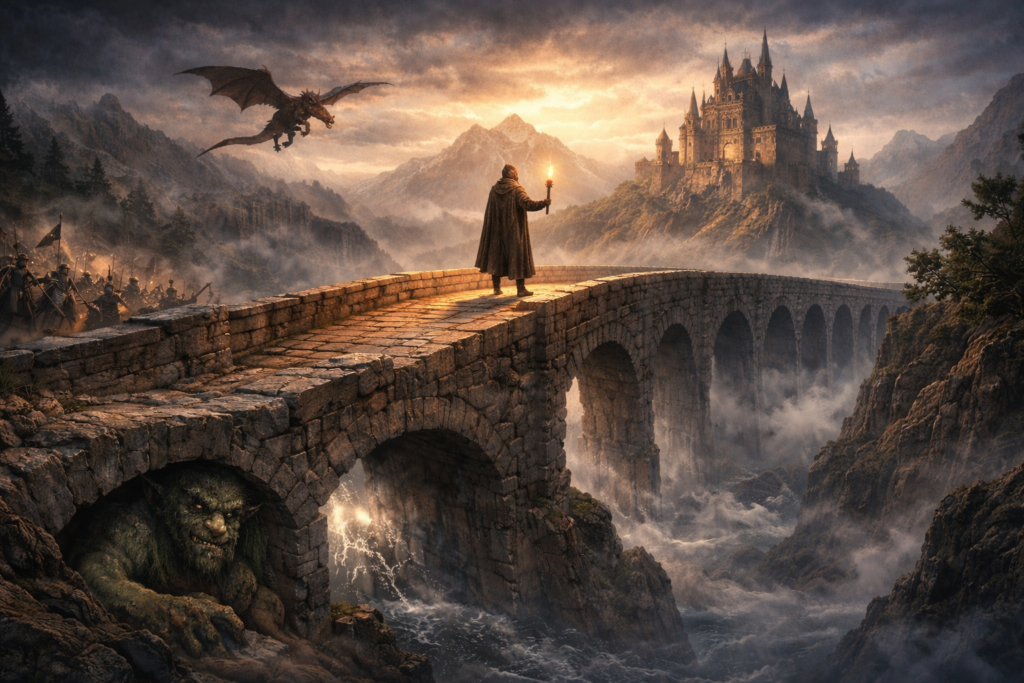
March 7 (today) has an interesting historical note attached to it: the capture of the Ludendorff Bridge at Remagen in 1945. Allied forces managed to seize the bridge intact and suddenly had a way across the Rhine that German defenses had hoped to deny them. And just like that, the strategic map of the war shifted.
Which is what bridges do.
They look simple—stone arches, wooden planks, maybe rope if the local engineers were feeling optimistic. But bridges quietly reshape the world around them. They redirect trade routes, determine where towns grow, and decide where armies must pass.
In other words, bridges create trouble. Which is why fantasy writers keep putting important scenes on them.
Bridges Turn Geography Into Decisions
A river or canyon is already an obstacle. But a bridge turns that obstacle into a decision point.
- Do you cross?
- Who controls the crossing?
- And who might be waiting on the other side?
For travelers in the medieval world, and for characters wandering through fantasy landscapes, bridges are choke points. You can wander along a riverbank for miles, but eventually you reach the place where everyone must pass: traders, pilgrims, messengers, and armies. Which means bridges become strategic whether anyone intended them to be or not.
History is full of examples where capturing a single crossing point changed the course of events. One of my favorite historical examples is Corbridge, the Roman crossing point on the River Tyne near Hadrian’s Wall. It wasn’t just a bridge. It was where roads, soldiers, merchants, and messages passed between Roman Britain and the frontier. Control that crossing and you controlled movement through the north.
Not bad for what looks like a piece of infrastructure.
Fantasy worlds work exactly the same way.
Tolkien Knew Exactly What Bridges Were For
Tolkien uses bridges constantly, often in subtle ways.
Early in The Lord of the Rings, Aragorn and the hobbits reach the Last Bridge on the road to Rivendell. Aragorn fears the Nazgûl might be waiting. If the Riders control the crossing, the road ahead is a trap. Then Aragorn discovers a green stone left by Glorfindel on the bridge—a quiet signal that the road is safe.
It’s a small moment, but it tells us something important: bridges are not just scenery. They are communication points, checkpoints, and strategic markers. Later Tolkien gives us a much more dramatic bridge.
The narrow stone span in the mines of Moria forces the Fellowship into a desperate confrontation with the Balrog. A wide hall might have allowed escape. A bridge does not.
Sometimes geography decides the story.
Bridges Between Worlds
Some bridges are more than physical structures. In Norse mythology, Bifröst is the rainbow bridge connecting Midgard and Asgard. It isn’t merely a road. It’s a guarded passage between realms.
That idea appears again and again in fantasy: bridges marking the place where you leave one world and enter another. Which, when you think about it, is exactly what portal fantasy does.
That thought occurred to me while I was thinking about bridges today, and also looking at the calendar. Because on March 19 my new book Veilbound releases, and it happens to be a portal fantasy.
Portal stories are essentially stories about crossing a bridge. Sometimes the bridge is literal. Sometimes it’s a wardrobe, a mirror, a gate, or a magical veil. But the idea is the same: you step across a boundary and suddenly everything changes.
You’re not where you were anymore.
Bridges That Change the Map
Some bridges quite literally take you into another country. Here in North America, you can drive across the Ambassador Bridge from Windsor, Ontario to Detroit, Michigan. One moment you’re in Canada, the next you’re in the United States.
The bridges and crossings around Niagara Falls do the same thing between Ontario and New York.
Europe has plenty of similar crossings. Even the bridges across the Severn between England and Wales carry a subtle sense of entering somewhere culturally different, even if the border isn’t technically international.
Cross a bridge and the world on the other side may not feel the same.
Fantasy loves that idea.
Bridges That Change Your Perspective
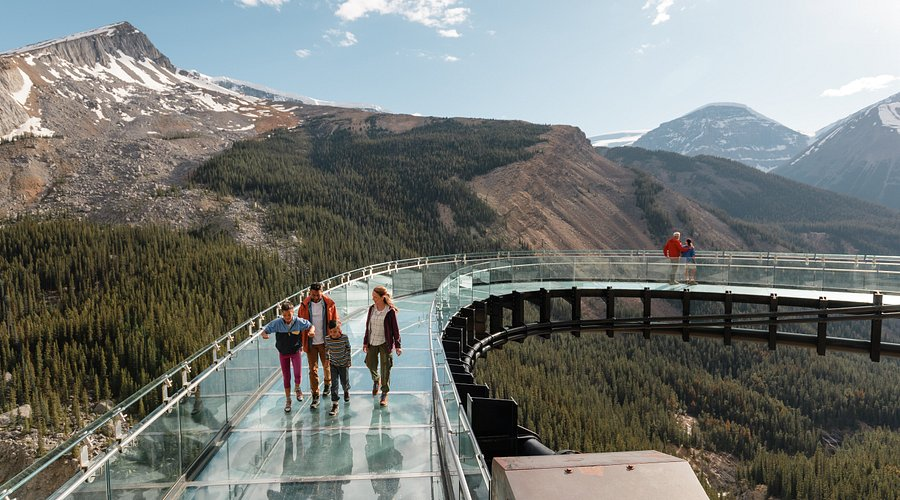
Modern engineers have taken the idea of bridges even further.
Some of the longest bridges in the world now stretch for miles across waterlogged landscapes—massive elevated highways threading across bays, deltas, and island chains. From the air they look like ribbons floating above the sea.
And then there are the bridges designed purely to change how you see the world.
China has built spectacular glass bridges across deep mountain gorges, where the only thing between you and the canyon floor is a sheet of transparent glass. In the Canadian Rockies, the glass-floored walkway at the Columbia Icefields lets visitors step out over a drop that would normally be impossible to approach.
Those bridges may not take you somewhere new. But they absolutely change your perspective. And that, when you think about it, may be the real magic of bridges.
And Then There Are Trolls
Folklore solved the strategic problem of bridges in a wonderfully simple way.
Put a monster there.
The famous troll under the bridge comes from Scandinavian folklore, especially the tale of The Three Billy Goats Gruff. In that story a troll lurks beneath a bridge and demands to eat anyone who tries to cross. Which makes a certain amount of sense. In the medieval world bridges were rare and valuable. Travelers had to use them, and everyone knew where they were. If you were a bandit, that’s where you would wait. Folklore simply replaced the bandit with a troll.
Honestly, it may even be an improvement.
Why Fantasy Loves Bridges
From a storytelling standpoint, bridges are incredibly useful. They create narrow spaces where characters cannot easily retreat. They give enemies a natural place to wait. They turn geography into tension.
Most importantly, they compress the map.
A thousand square miles of wilderness suddenly narrows into a single span of stone. Which means if something important is going to happen…It will probably happen on the bridge.
And now I’m curious. What’s your favorite bridge scene in fantasy? The one where the crossing really mattered?
And if you had the chance, what bridge in the real world would you cross simply because it’s there?

.
.
Coming soon: After the Quieting.
Newly Released: Veilbound — Firebird Omnibus — Sylvalight